


Tom Arlow, owner of Arlow Plumbing & HeatingBoiler playing up? Let’s sort it.
Help & support

Help and support for our customers

Quick checks and simple fixes for the most common boiler and heating problems. We hope it’s something quick to sort.

  • 750+ five-star reviews
  • Gas Safe registered
  • OFTEC registered
  • Gas & oil boilers

Smell gas or think there’s a carbon monoxide leak? Get everyone into fresh air and call the National Gas Emergency Service on 0800 111 999, day or night.

Call 0800 111 999
Customer help & support

What do you need help with?

Before calling the team or filling in the form, have a look through the topics below. Lots of common problems have a simple fix you can do yourself.

Emergencies

If it’s urgent, start here

Can you smell gas?

If you ever notice a gas smell, act quickly to stay safe.

  • Open all the doors and windows to get fresh air flowing.
  • Turn the gas off at the meter if you can.
  • Don’t use electrical switches, naked flames or anything that could make a spark.
  • Call the National Gas Emergency Service straight away on 0800 111 999.

Once it’s safe, contact us to investigate and repair any affected appliances. Carbon monoxide alarm going off? Turn off any gas appliances, get everyone outside and call 0800 111 999. If anyone feels unwell, get medical help.

Water everywhere, I need help fast!

A water leak can be really stressful, but don’t worry, we’re here to help. Act fast to stop any further damage.

  • Turn the boiler and heating off.
  • Turn the water off at your stopcock, usually under the kitchen sink.
  • If water is near any electrics, switch the electricity off at the fuse box if it’s safe to do so.
  • Don’t try to fix the boiler yourself.

Give us a call and we’ll get it sorted quickly and safely.

Drips and leaks

Small leaks and drips

No stress, it’s just a small drip

There’s no need to worry if it’s just a small drip, but it’s best to get it sorted soon, before it gets worse or leads to extra repair costs.

  • Put a bowl or towel under the drip to catch the water.
  • Take a photo of where it’s coming from.
  • Book an appointment and we’ll make sure it’s fixed properly.

My magnetic filter is leaking

Your magnetic filter catches sludge and debris in your heating system. If it starts to drip, it’s usually a cracked housing or a worn seal, and we’ll need to find the cause before we can fix it.

  • Put a towel or bowl underneath to catch the water.
  • Don’t try to open the filter yourself.
  • Get in touch. If your filter is still under warranty, you might qualify for a free repair or replacement.

Cleaning the filter at your annual service helps stop it getting blocked and leaking.

Watch the video

Magnetic filters, what do they do?

A quick look at what your magnetic filter does, and why we clean it at every service.

Read the full guide
No heat

No heating or hot water?

I have no heating!

Coming home to a cold house is a real letdown, but there are a few easy checks you can do first.

  • Check your thermostat is set high enough, and replace any flat batteries.
  • Make sure the thermostat and its receiver are switched on and set correctly.
  • Check the programmer or timer is set to heating on, and not on holiday mode.
  • Look at the pressure gauge. If it’s below 1 bar, top up the pressure.
  • Check the boiler display for a fault code, and see resets and fault codes.

Still no heat after these checks? Get in touch and we’ll book you in.

No heating and no hot water

When the heating and hot water both stop, it’s usually the boiler itself. Before you call, check these.

  • Make sure the boiler has power. The display should be on, and the switch next to the boiler should be on.
  • Check other gas appliances, like the hob, are working. If you have a prepayment meter, check it has credit.
  • Check the pressure gauge is between 1 and 1.5 bar.
  • Note any fault code, then press reset once, following your user guide.
  • In freezing weather, check for a frozen condensate pipe.

If none of these help, it’s time for us to take a look.

Low boiler pressure

How to top up your boiler pressure

Pressure can drop over time, after bleeding radiators or because of a small leak. When it falls below 1 bar, most boilers stop and show a fault. Topping it up is a simple job you can usually do yourself.

Step by step

Aim for 1 to 1.5 bar on the gauge when the heating is off and the system is cold. Check your user guide for your boiler’s exact range.

  1. Turn the boiler off and let the system cool down.
  2. Put an old towel under the boiler to catch any drips.
  3. Find the filling loop or filling key underneath the boiler. Only touch controls you can clearly identify.
  4. Open the valve slowly and watch the pressure gauge. If there are two valves, you may need to open both.
  5. Close the valves fully as soon as the gauge reads between 1 and 1.5 bar.
  6. Turn the boiler back on, and press reset if it’s still showing a fault.

When to call us instead

Topping up once or twice a year is normal. Stop and get in touch if:

  • You’re topping up every month or more often
  • The pressure drops quickly straight after topping up
  • The pressure keeps rising after you’ve closed the valves
  • You can see water leaking from the boiler, pipes or radiators
  • You can’t find or identify the filling controls

Never take the front cover off your boiler. Anything inside it is a job for a Gas Safe engineer.
Watch how it’s done

How to top up your heating pressure

Read the full guide

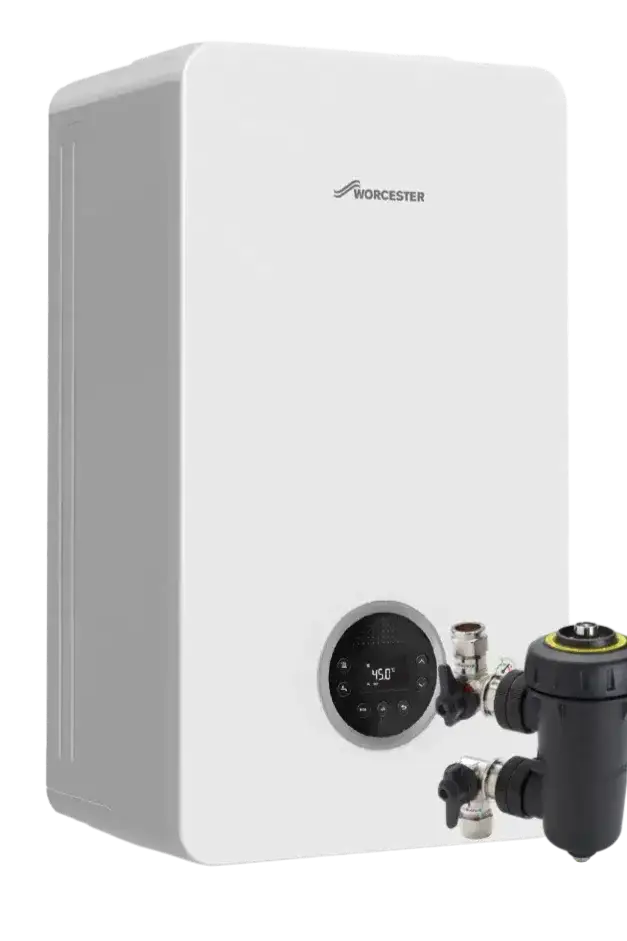
How to top up a Worcester Bosch boiler

Read the Worcester guide

How to top up an Ideal boiler

Read the Ideal guide

How to repressurise a Viessmann Vitodens 100-W

Read the Viessmann guide

Tips for the boilers we fit and service most

Worcester Bosch boiler

Many Worcester Greenstar combis use a filling key, kept in a small tray underneath the boiler. Newer models may have a keyless filling link instead. Your user guide will show which one you have.

Read the Worcester guide Worcester Bosch servicing
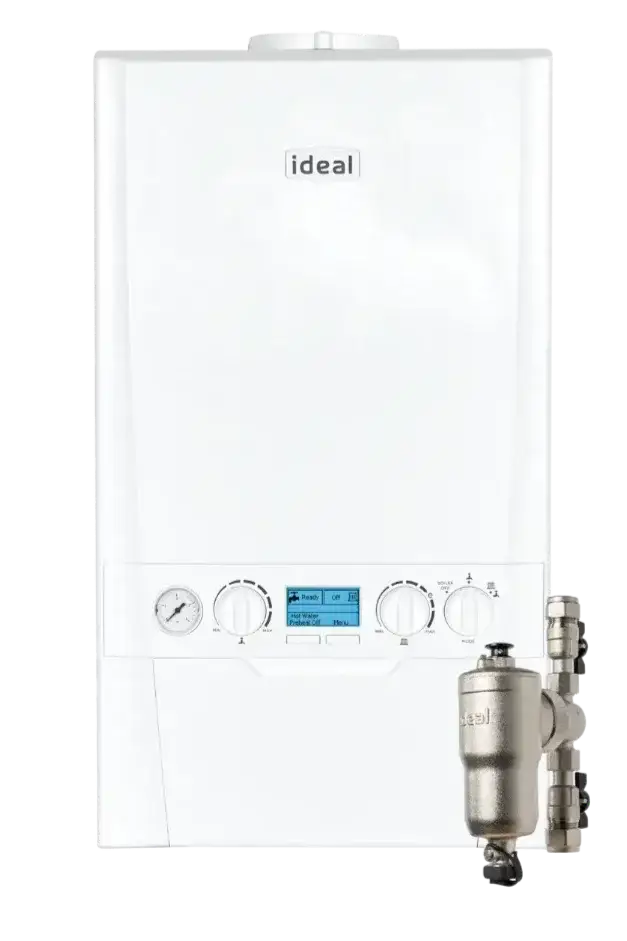

Ideal boiler

Ideal combis usually have a flexible silver hose or a horseshoe-shaped pipe under the boiler. On boilers made before 2016, the pressure gauge is often on the pipework underneath rather than on the front.

Read the Ideal guide Ideal servicing
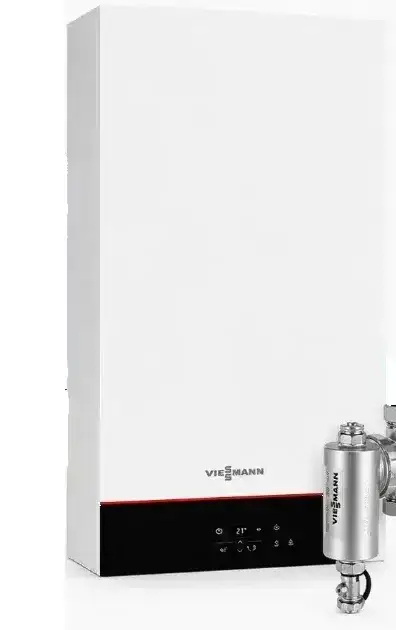

Viessmann boiler

Viessmann Vitodens combis usually have a filling valve underneath the boiler, and the pressure shows on the display. Your user guide shows exactly where the valve is on your model.

Read the Viessmann guide Viessmann servicing
Cold radiators and cold weather

Radiators and frozen pipes

Bleeding a radiator

If a radiator is cold at the top but warm at the bottom, there’s probably air trapped inside. Bleeding it lets the air out.

  1. Turn the heating off and let the radiators cool.
  2. Hold a cloth under the bleed valve at the top corner of the radiator.
  3. Use a radiator key to turn the valve anticlockwise, about a quarter turn. You’ll hear air hissing out.
  4. Close the valve as soon as water starts to come out. Don’t overtighten it.
  5. Check your boiler pressure afterwards, and top it up if it’s dropped below 1 bar.

Cold at the bottom instead? That’s usually sludge, not air. A system flush or magnetic filter can help, so get in touch.

Frozen condensate pipe

In freezing weather, the plastic condensate pipe that runs from your boiler to an outside drain can freeze. The boiler then stops as a safety measure, and may gurgle or show a fault code.

  1. Find the condensate pipe where it runs outside. It’s usually white or grey plastic.
  2. Boil a kettle and let it cool for 10 to 15 minutes, so the water is warm, not boiling.
  3. Pour it slowly along the pipe, starting at the top and working down. A hot water bottle or heat pack also works.
  4. Once the ice has melted, reset the boiler.

Never use boiling water, and watch out for ice on the ground. If your pipe keeps freezing, ask us about insulating it.

Watch the video

How to bleed a radiator

Watch one of our engineers bleed a radiator step by step, then check your boiler pressure afterwards.

Read the full guide
Boiler controls

Resets, fault codes and thermostats

Boiler reset and fault codes

Most modern boilers show a fault code on the display when something’s wrong. The code tells you, and us, where to start.

  1. Write down the code, or take a photo of the display.
  2. Check your user guide to see what it means. Some faults, like low pressure, you can fix yourself.
  3. Press the reset button once and give the boiler a few minutes.
  4. If it locks out again, don’t keep resetting it. Send us the code and we’ll advise.

I don’t understand my thermostat

If your thermostat isn’t responding, start with the user manual. It should explain how to use it and fix common problems.

  • Check the batteries and replace them if they’re flat.
  • Make sure the receiver near the boiler is switched on and its light is showing.
  • Check the time, date and heating schedule are set correctly.
  • Turn the temperature up a few degrees and wait a few minutes to see if the boiler fires up.

Still not working? We can diagnose and fix it, or help you understand how to use it.

Watch the video

Setting up a Worcester Bosch Comfort II controller

Got a Worcester Bosch Comfort II controller? Here’s how to set it up in a few easy steps.

Still stuck? Request help

Still stuck? Send us a photo

WhatsApp a photo of the boiler display, any fault code and the pressure gauge, plus the make and model, to 07761 510503. Or chat with Rosie, our digital assistant, in the chat box at the bottom of the screen.

Request help

Request help from the team

Fill in the short form and we’ll get back to you on the next working day. For anything urgent, please call the office.

FAQ

Still got a question?

Here are the questions Somerset homeowners ask us most when something goes wrong with their boiler or heating. Still not sure? Message us on WhatsApp and we’ll help.

Is it safe to top up my boiler pressure myself?
Yes, for most boilers it’s a simple job you can do yourself, as long as you follow your user guide and only use filling controls you can clearly identify. Never take the front cover off your boiler.
What pressure should my boiler be at?
Most boilers should sit between 1 and 1.5 bar when the heating is off and the system is cold. It can rise a little when the heating is on. Check your user guide for your boiler’s exact range.
How often should I need to top up the pressure?
Once or twice a year is normal. If you’re topping up every month or more often, there’s probably a leak or a fault, so get in touch.
My carbon monoxide alarm is going off. What should I do?
Turn off any gas appliances, open the windows, get everyone outside and call the National Gas Emergency Service on 0800 111 999. If anyone feels unwell, get medical help straight away.
Do you help if you didn’t fit my boiler?
Yes. We help homes across Bridgwater, Taunton and Burnham-on-Sea, whoever fitted the boiler. Get in touch and we’ll let you know the best next step.
What should I send you before you visit?
A photo of the boiler display and any fault code, the pressure gauge, and the make and model of your boiler. It helps us bring the right parts first time.
Can an annual service stop these problems?
It won’t stop everything, but a yearly service catches most problems early and keeps your warranty valid. Our care plans include your annual service and priority call-outs.
Where can I find my boiler’s user guide?
It’s usually in a pocket on the boiler or with your installation paperwork. If you can’t find it, most manufacturers let you download user guides from their website using your boiler’s make and model.

Fancy a quick challenge?

Test what you know about your heating and plumbing with our six-question plumbers pub quiz. Each answer links to the help guide that explains it.

Plumbing & heating across Somerset

Areas we cover

Based in Bridgwater, our engineers look after homes across Taunton, Burnham-on-Sea and the surrounding towns and villages.

BridgwaterTauntonBurnham-on-SeaHighbridgeNorth PethertonWellingtonCheddarMineheadStreetWeston-super-Mare