

 Case study · Woolavington, near Bridgwater
Air source heat pump installation in Woolavington, Somerset
We swapped a working five-year-old oil boiler for a 5kW Vaillant aroTHERM heat pump, with a £9,000 Boiler Upgrade Scheme grant and 0% VAT.
- 5kWVaillant aroTHERM
- £9,000Boiler Upgrade Scheme grant
- 46°CHeating flow temperature
- 1 weekOn site with two engineers
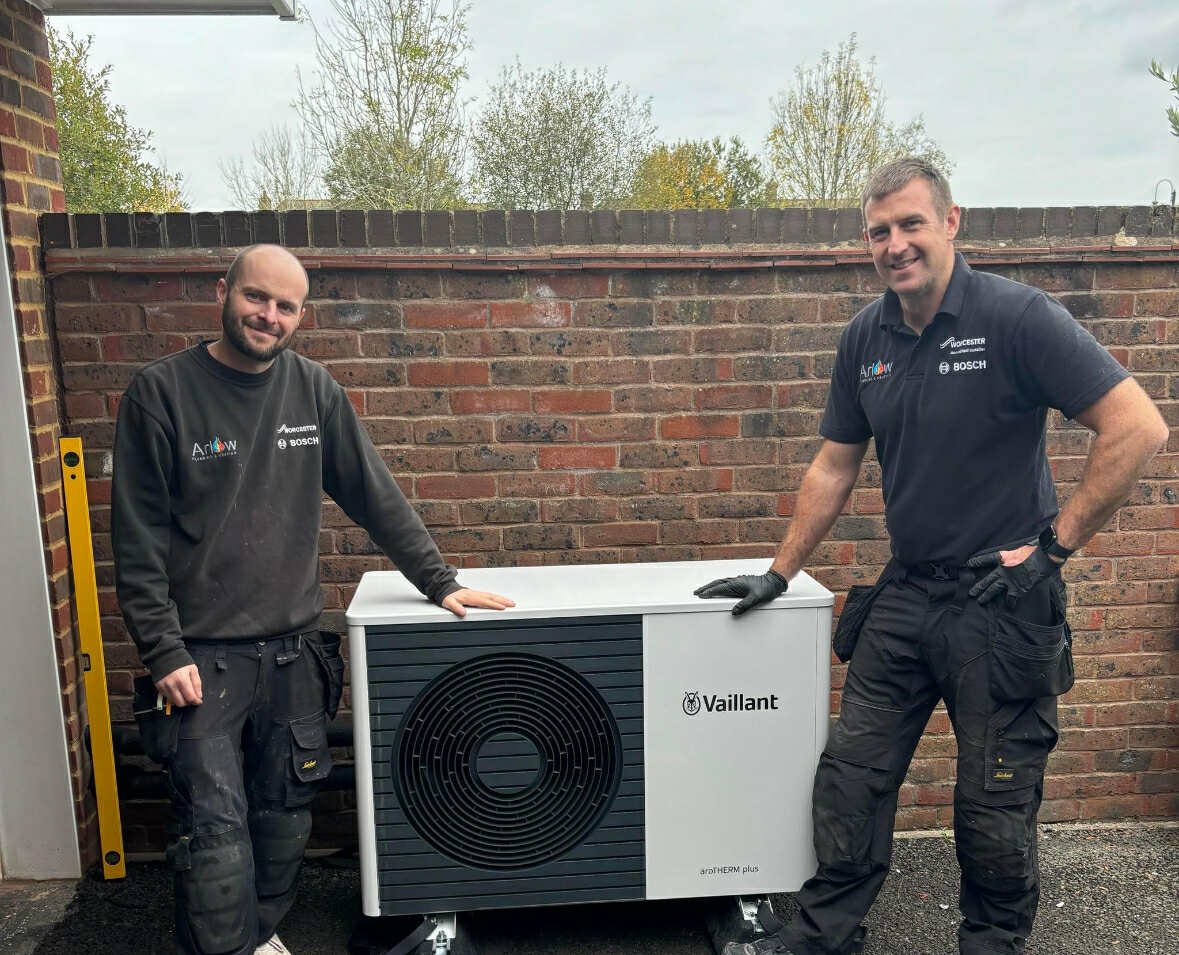
For this project in Woolavington, near Bridgwater, we helped one of our existing customers move from oil heating to a new Vaillant air source heat pump. The interesting part? There was nothing wrong with their oil boiler.
Why replace a working oil boiler?
It’s a fair question. The oil boiler was only about five years old and still working well, so this wasn’t a breakdown job. For the homeowner, it was about looking ahead.
The £9,000 Boiler Upgrade Scheme grant made a big contribution, and 0% VAT on qualifying energy-saving materials and installation added another saving. Moving off oil also means no more watching oil prices or ordering deliveries.
Because the old boiler hadn’t failed, we could plan and design the new system properly around the house and the way the family uses it.
It starts with the heat loss calculation
The biggest difference between fitting a boiler and fitting a heat pump is the design work that happens before we start.
We visited first to talk through what the family wanted, look at the existing system and give an idea of likely costs. Once they were happy to go ahead, we carried out a room-by-room heat loss calculation, measuring the house and looking at how it’s built to work out how much heat each room needs.
That told us everything else: the heat pump size, radiator outputs, pipework and hot water storage.
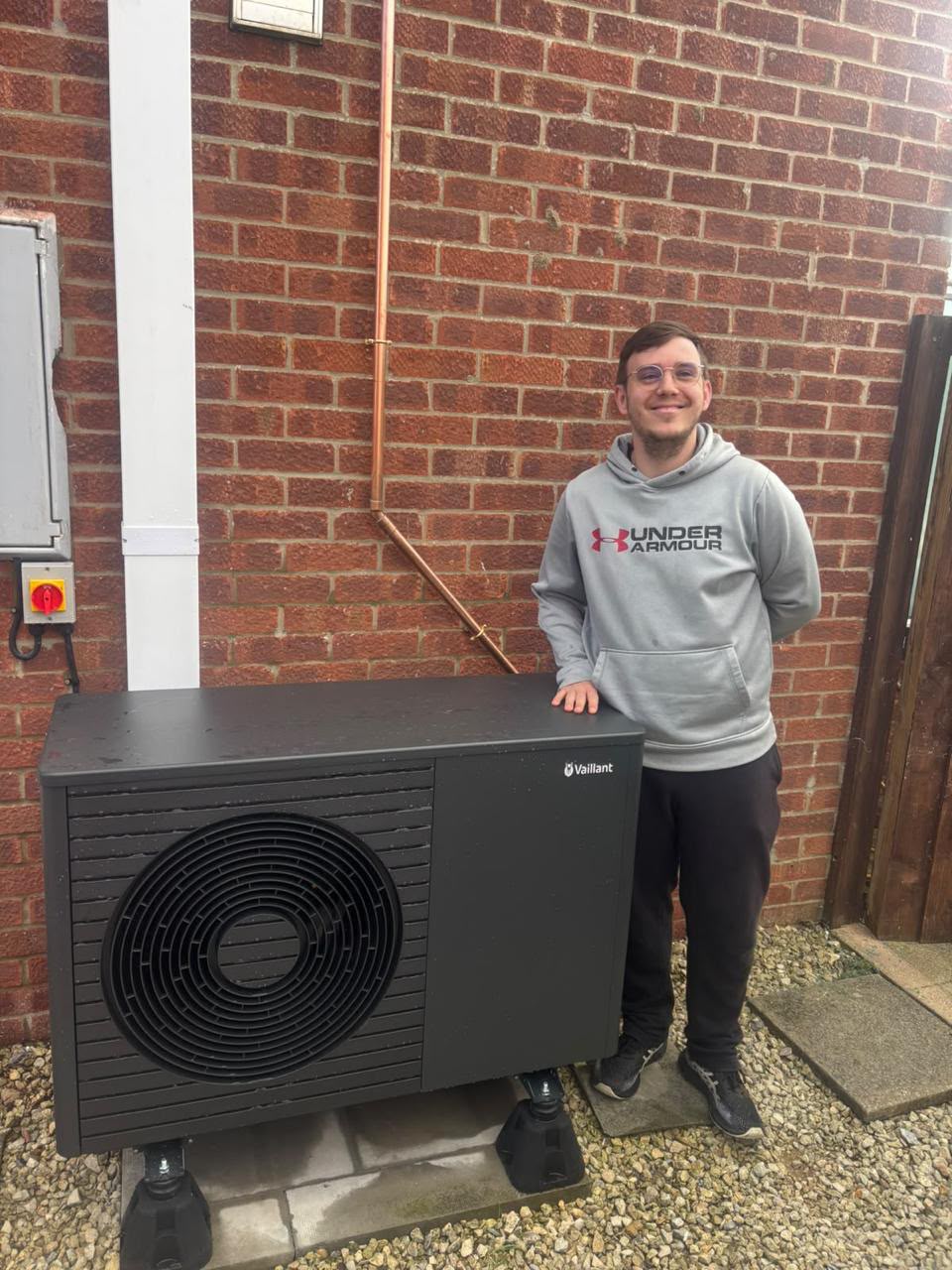
A 5kW Vaillant aroTHERM
From the heat loss and system design, we chose a 5kW Vaillant aroTHERM. The aim isn’t to fit the biggest heat pump possible. Correct sizing, with the right radiators and good system design, is what gives you efficient running and a comfortable home through the colder months.
A cylinder built for heat pumps
We removed the old hot water setup and fitted a 200-litre Joule high-gain unvented cylinder with a large 2.8m² coil. The bigger coil moves heat into your hot water more easily, so it works well with a lower-temperature heat source like a heat pump.
Radiators sized room by room
We didn’t swap the radiators like for like. Each one was sized for its room and the lower water temperature the heat pump runs at, from single panels up to larger triple panels where more output was needed.
In the kitchen we fitted a Reina Casina aluminium radiator, which gives the output the room needs and looks great too.
What about the microbore pipework?
We’re often asked whether a heat pump means replacing all the pipework. Not necessarily. This house had some existing microbore, so we checked the flow rates as part of the design. We upgraded sections where needed and kept the rest where our calculations showed it would perform properly.
We don’t replace things just because they’re there. If an upgrade is needed, we’ll explain why.
Designed around a 46°C flow temperature
The system runs at 46°C for heating and about 48°C for hot water. Heat pumps are most efficient when they heat your home with lower water temperatures, which is why the radiator sizing, pipework and heat loss work matter so much.
Our aim is to keep the seasonal efficiency (SCOP) as high as practical while the family stays comfortable. Put simply, we want as much heat as possible from every unit of electricity.
One week, two Arlow engineers
Before we started, we prepared the electrical details for the DNO (the local electricity network), arranged the £9,000 grant and ordered the kit.
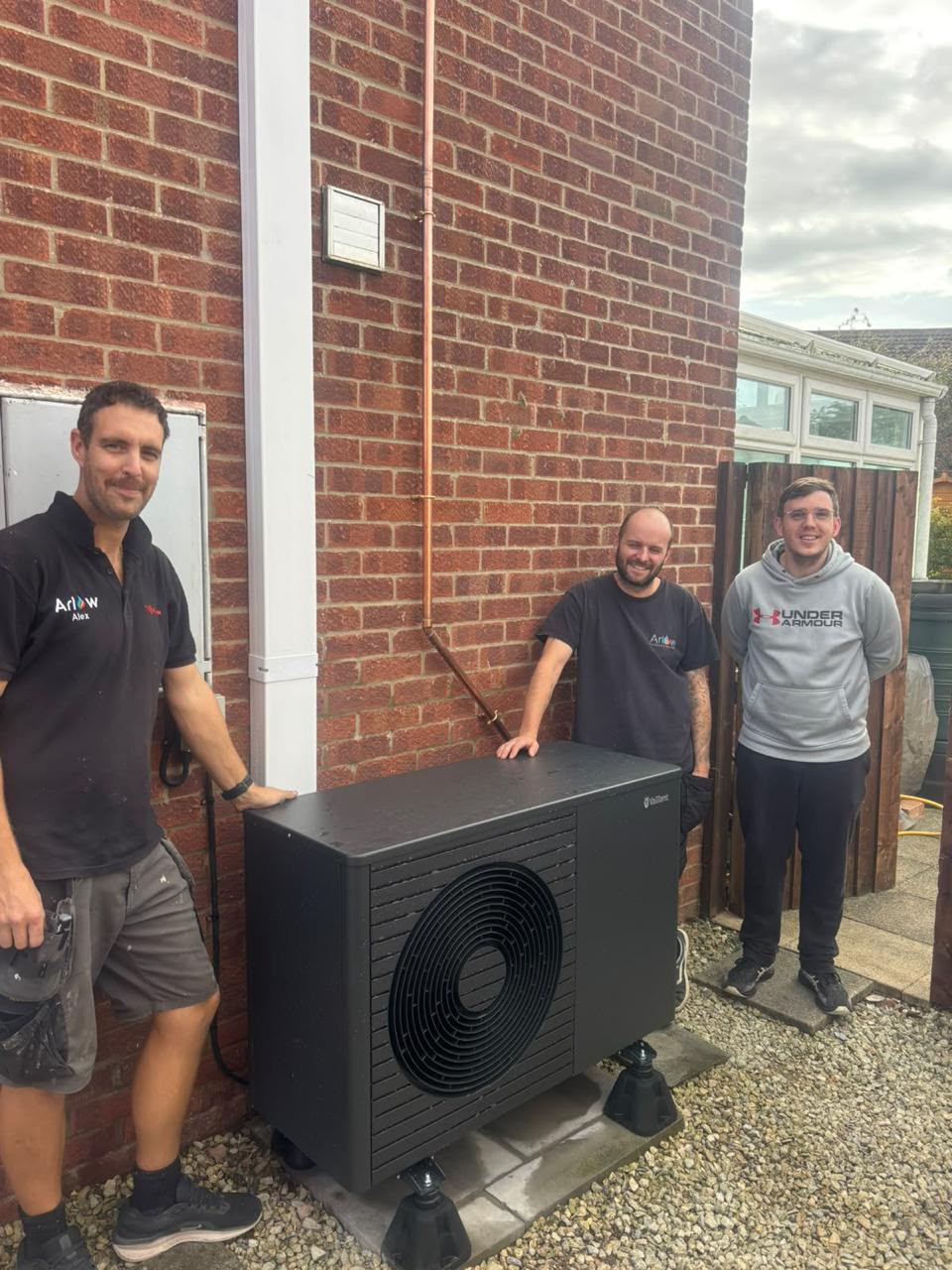
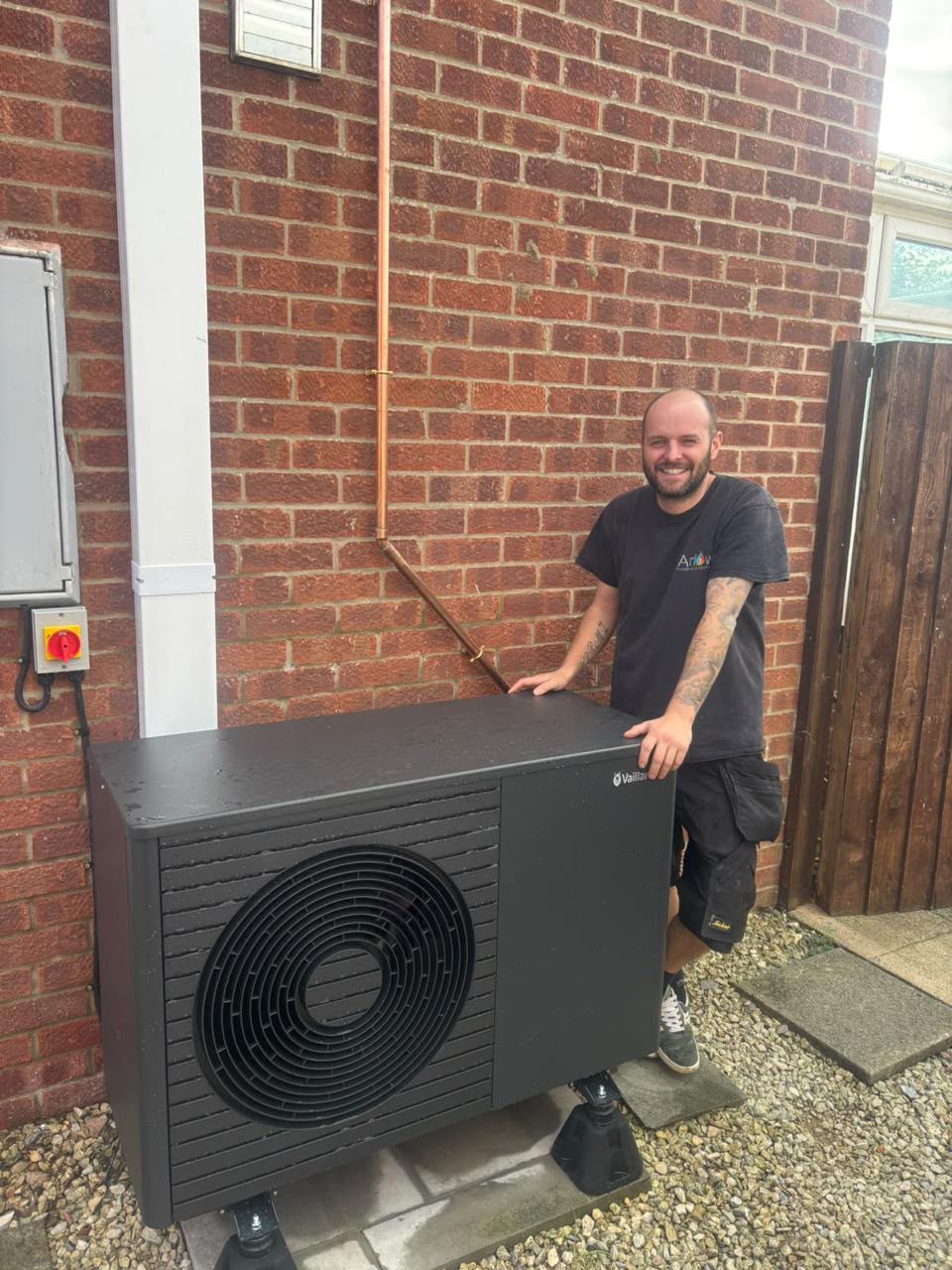
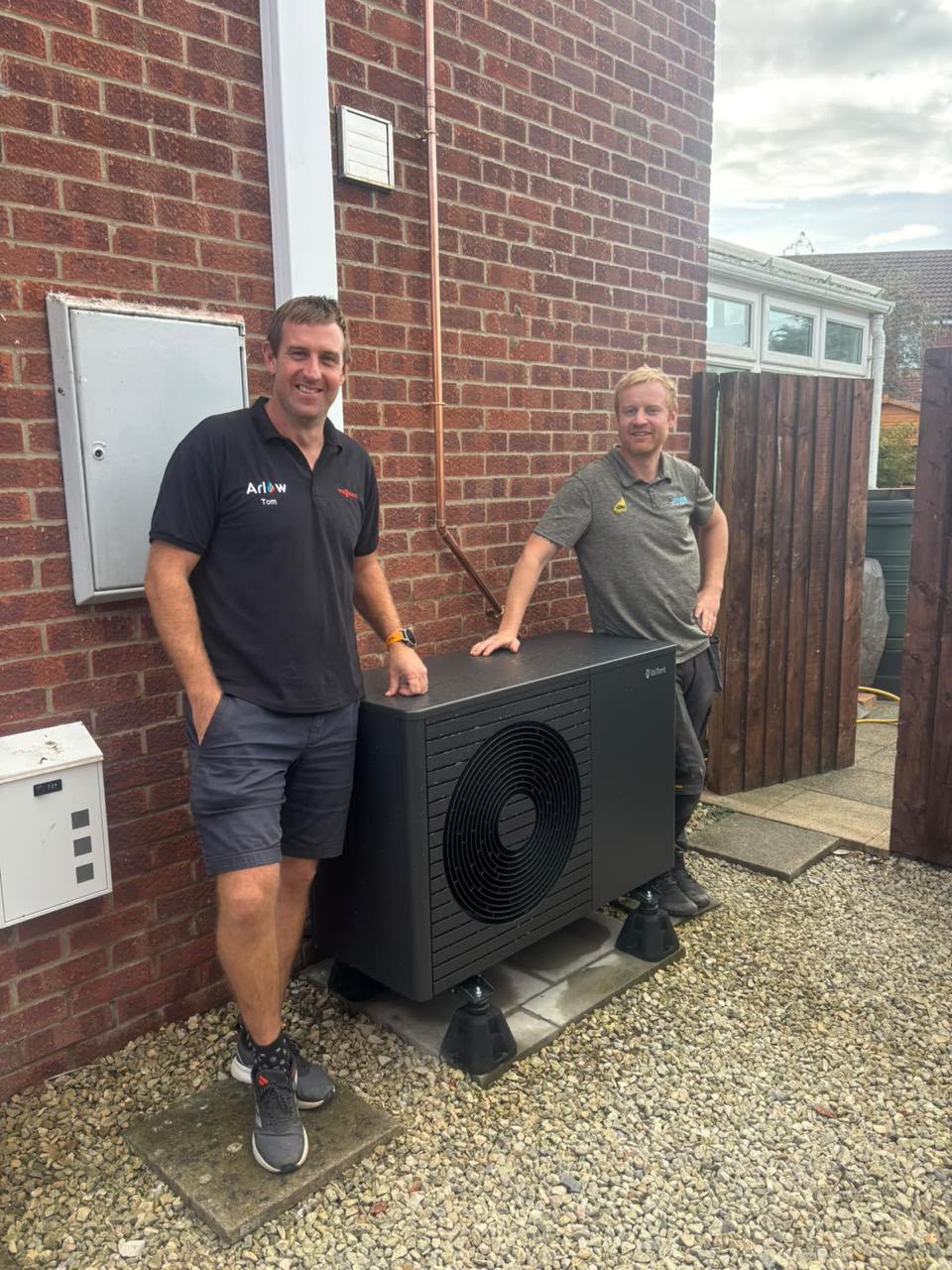
The main installation took about a week, with Tom and Alex on site. Radiators were changed, pipework altered where needed, the cylinder fitted, the electrics and controls completed, and the whole system flushed, commissioned and tested.
Finding the sweet spot
Commissioning isn’t the end of our involvement. We started the system on a slightly lower weather compensation curve, and we’ll keep working with the homeowner through autumn and winter, making small adjustments as the weather changes.
The homeowner also joins one of our heat pump care packages, with yearly servicing and support to keep the 7-year manufacturer’s guarantee in place. Next up for them is solar PV and battery storage, which we can help with through our MCS partnership.
We didn’t want to simply add ‘heat pump installer’ to our website and start selling systems. We wanted to develop this side of the business properly.
Tom Arlow, Arlow Plumbing & Heating

The same five-star approach
As we’ve grown the renewables side of Arlow, we’ve worked closely with Michael from Option Energy Solutions, a good friend and a very experienced heat pump installer. His experience has helped us sharpen our design process and installation standards.
Whether it’s a boiler, a service or a heat pump, our approach doesn’t change: understand the property, design the job properly, fit it tidily and be there afterwards.
 More from Arlow
More case studies
 Learning alongside Option in SteyningHands-on with a Vaillant aroTHERM plus, from design discussions to commissioning, with MCS certified installs.Read more
 Viessmann heat pump training for our engineersTom Arlow, Tom W and Alex at the Viessmann Academy, from classroom theory to hands-on units and controls.Read more
 The Somerset guide to air source heat pumpsTom answers the 10 big questions, from suitability and noise to costs and grants.Read more Your questions
Questions about this job
Can you replace a working oil boiler with a heat pump?
Yes. In Woolavington the oil boiler was about five years old and still working well. The homeowner switched to make the most of the £9,000 Boiler Upgrade Scheme grant and 0% VAT, and to move away from oil prices and deliveries.
Do I need to replace all my pipework for a heat pump?
Not necessarily. We check the flow rates as part of the design. On this job we upgraded some sections and kept the existing microbore where our calculations showed it would perform properly.
What flow temperature does a heat pump run at?
It depends on the home and the radiators. This system was designed for 46°C for heating and about 48°C for hot water. Lower temperatures usually mean better efficiency, which is why radiator sizing matters.
How long does a heat pump installation take?
This one took about a week on site with two of our engineers, after the survey, heat loss calculation, design, DNO paperwork and grant were sorted.
Plumbing & heating across SomersetAreas we cover
Based in Bridgwater, our engineers look after homes across Taunton, Burnham-on-Sea and the surrounding towns and villages.
Not sure if we cover you? Call 01278 310120